Pedigree Chart Generator
Affiliate links on this page are marked (paid link); BreedTools may earn a commission at no extra cost to you.
Pedigree Chart Generator
Generate a professional, printable pedigree chart — 3, 4, or 5 generations. Enter your dog's details and ancestry to create a clean document for puppy packets, breeding records, or kennel club submissions.
Enter your dog's information
Registered name, breed, date of birth, registration number, and other details.
Fill in the family tree
Enter the sire, dam, and earlier generations — 3 by default, up to 5.
Print or save your chart
Get a clean, professional pedigree chart ready to print or save as a PDF.
How to read a pedigree chart
A pedigree chart is a visual map of a dog's ancestry. It reads from left to right, with the subject dog on the far left and each generation of ancestors extending to the right. The sire (father) line is always on top, and the dam (mother) line is always on the bottom.
In a 3-generation chart, you'll see 14 ancestors total: 2 parents, 4 grandparents, and 8 great-grandparents. This is the standard depth used by most kennel clubs and is enough to identify linebreeding patterns, assess genetic diversity, and provide meaningful background for puppy buyers.
What registration numbers mean
Each registered purebred dog receives a unique registration number from their kennel club. This number links back to a verified chain of ancestry in the registry's database. Common registries include:
- AKC (American Kennel Club) — format like SS12345678
- UKC (United Kennel Club) — format varies by breed
- CKC (Canadian Kennel Club) — alphanumeric format
- KC (The Kennel Club, UK) — lettered format with breed code
Including registration numbers on your pedigree chart allows anyone to verify your dog's ancestry through the appropriate registry. It adds credibility and traceability to your breeding program.
Most modern AKC numbers are two letters followed by eight digits. The letters identify the breed group and roll over as number blocks fill — the letter O is skipped so it isn't mistaken for a zero. For a full walkthrough of how the pieces fit together, see the AKC's how to read a pedigree guide.
Why 3-generation pedigrees matter for breeding
Three generations is the minimum depth needed to make informed breeding decisions. With just the parents, you can't see whether the sire and dam share common ancestors — which is where inbreeding risk hides. A 3-generation chart reveals:
- Linebreeding patterns — the same dog appearing multiple times in the pedigree
- Genetic diversity — whether all 14 ancestor slots are filled by unique dogs
- Health line tracking — knowing which lines have produced health-tested, titled dogs
- Breed type consistency — whether the ancestry supports predictable structure and temperament
For deeper analysis, pair this chart with a coefficient of inbreeding (COI) calculation. A 3-generation pedigree gives an approximate COI, but 5+ generations gives a more accurate picture.
Disclosure: As an Amazon Associate I earn from qualifying purchases. Links marked (paid link) are affiliate links, including Chewy affiliate links — buying through them supports BreedTools and adds nothing to your price, and it never changes what we recommend. Full affiliate disclosure
Take the pedigree further
A pedigree names the ancestors. DNA verifies them, and the right reference teaches you what to do with the pattern.
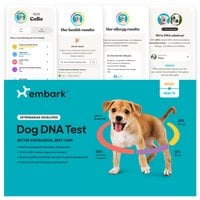
Embark Breed + Health Kit
Verify the pedigreeA written pedigree is only as good as its accuracy. Embark's DNA confirms parentage, reveals the actual breed makeup behind the names, and reports a genomic COI plus 270+ health conditions — turning a paper chart into verified ancestry.
Control of Canine Genetic Diseases — George A. Padgett, DVM
Breeding referenceThe classic breeder's guide to reading a pedigree for disease risk — how to run and interpret test matings and lower the odds of producing affected puppies. The reference most often recommended for turning a pedigree into breeding decisions.
More dog breeding books
Browse current genetics, reproduction, and breed-management references for your shelf.
How many generations should a pedigree show?
Three generations (14 ancestors) is the standard depth for a puppy buyer's pedigree, and it's the minimum most kennel clubs use. Breeders evaluating their own breeding stock often go deeper:
- 3 generations — the buyer-handoff standard; enough to spot linebreeding and give buyers meaningful background.
- 4 generations (30 ancestors) — the depth of an AKC Certified Pedigree.
- 5 generations (62 ancestors) — favored when assessing genetic diversity further back in the lines.
This generator lets you switch between 3, 4, and 5 generations — fill only the ancestor slots you know, and leave the rest blank.
Decoding titles in a pedigree (CH, GCH, and more)
Titled ancestors usually wear their titles as a prefix or suffix on the registered name. Recognizing them tells you which lines have been proven in the ring, the field, or working venues. Common AKC abbreviations:
- CH — Conformation Champion (earned with 15 points, including two majors, under at least three different judges)
- GCH — Grand Champion, a level above CH
- FC — Field Champion; OTCH — Obedience Trial Champion
- Performance and health suffixes (e.g., CD for Companion Dog, RN for Rally Novice) appear after the name
The complete list lives in the AKC's titles & abbreviations guide.
Including pedigrees in puppy packets
Responsible breeders typically include a copy of the puppy's pedigree chart in their puppy packet alongside the sales contract, health records, and care instructions. This gives buyers transparency about their dog's background and helps them understand the breeding decisions behind their puppy.
Pedigree chart FAQs
1What is a 3-generation pedigree chart?
A 3-generation pedigree chart shows your dog's ancestry back three generations: parents (sire and dam), grandparents (4 dogs), and great-grandparents (8 dogs). This gives a total of 14 ancestors displayed in a branching tree format. It's the standard depth required by most kennel clubs for registration and breeding records.
2Is this a pedigree template I can fill in?
Yes. The generator works like a fill-in-the-blank dog pedigree template: choose 3, 4, or 5 generations, type each ancestor's name — and optionally titles and registration numbers — into the empty slots, and the chart formats itself. There's no Word or Excel template to download and wrestle with. Fill in the ancestors you know, leave the rest blank, and print the finished chart or save it as a PDF.
3Why do breeders need pedigree charts?
Pedigree charts are essential for responsible breeding decisions. They help breeders identify linebreeding or inbreeding, track health history through family lines, verify ancestry for registration purposes, and provide buyers with documentation about their puppy's background. Many kennel clubs require a pedigree chart as part of the registration process.
4What is a registration number on a pedigree?
A registration number is a unique identifier assigned to a purebred dog by a kennel club such as the AKC, UKC, or CKC. It confirms the dog's recorded ancestry and breed status. The format varies by registry — for example, AKC numbers typically look like 'SS12345678'. Having a registration number allows the dog's offspring to be registered as well.
5Can I use this pedigree chart for kennel club registration?
This tool generates a professional-quality pedigree chart suitable for inclusion in puppy packets, breeding records, and personal documentation. However, official kennel club registration requires submitting forms directly through the registry (AKC, UKC, etc.) with verified parentage. This chart is ideal as a supplementary document for buyers and your own records.
6What's the difference between a pedigree and a registration certificate?
A pedigree is a document showing a dog's family tree — parents, grandparents, and great-grandparents. A registration certificate is an official document from a kennel club confirming the dog's identity, breed, ownership, and registered ancestry. You can have a pedigree chart without registration (for unregistered dogs), but a registration certificate always comes with verified pedigree information.
7Can I use this as a pedigree certificate for puppy buyers?
Yes — this is exactly how many breeders use it. Print the finished chart as a DIY pedigree certificate for your puppy packets, alongside the sales contract and health records. It documents the puppy's ancestry in a clean, professional format buyers can keep. Just be clear with buyers that an official registration certificate still comes only from the registry (AKC, UKC, CKC) — this certificate documents the pedigree; it doesn't replace kennel club registration.
8How do I read a pedigree chart?
Pedigree charts read left to right. The subject dog is on the far left. Moving right, you see the sire (father) on top and dam (mother) on the bottom. Each subsequent column shows the previous generation's parents — so the sire's parents appear above, the dam's parents below. The rightmost column shows great-grandparents. Males are traditionally listed on top in each pair.
9What does linebreeding look like on a pedigree?
Linebreeding is when the same ancestor appears more than once in a pedigree. On a 3-generation chart, you might see the same dog's name appearing in multiple positions — for example, as both the sire's grandsire and the dam's grandsire. This concentrates that dog's genetics in the offspring. Use a COI calculator alongside your pedigree chart to assess the degree of inbreeding.
10Can I use this as a dog line breeding chart?
Yes. A line breeding chart is a pedigree chart read for repeated names. Enter the planned litter as the subject dog, with the sire and dam and their ancestors on each side, and set the depth to 4 or 5 generations. Any ancestor who appears on both the sire's side and the dam's side is the line you're breeding on, and how far back the name repeats tells you how tight it is — a grandparent doubled on both sides is far closer than a great-great-grandparent. The chart gives you the picture; to put a percentage on it, enter the first three generations into the COI calculator (it works from a 3-generation pedigree), or use dedicated pedigree software for deeper analysis.
11Can I save or print the pedigree chart I create?
Yes. The chart is designed to be print-ready with clean formatting that translates well to paper. Use your browser's print function or save as PDF. Many breeders include a printed copy of the pedigree chart in their puppy packets alongside the sales contract, health records, and care instructions. All data stays in your browser and is never uploaded to a server.