Dog Ideal Weight Calculator
Affiliate links on this page are marked (paid link); BreedTools may earn a commission at no extra cost to you.
Understanding healthy weight in dogs
About 59% of dogs in the United States are overweight or have obesity (APOP 2022, up from 56% in 2018), and VCA calls obesity the most common preventable disease in dogs. The landmark Purina Lifespan Study (Kealy 2002) found that Labradors fed 25% less than their paired littermates lived a median of 1.8 years longer— and had significantly delayed onset of chronic disease.
Weight management starts with knowing your dog's ideal range. Unlike humans, there is no universal “BMI” for dogs. Ideal weight depends on breed, sex, frame size, and age. A 70-lb Labrador might be perfect while a 70-lb Beagle would be dangerously obese.
Weight status categories
VCA defines overweight as 10–20% above ideal body weight and obese as more than 20% above it. This calculator's bands are its own: anything above the top of the breed range counts as overweight, more than 20% above the top counts as obese (VCA's 20% line applied to the top of the range), and the underweight cut-off is 10% below the low end.
Underweight
More than 10% below the low end of the ideal range. May indicate illness, parasites, or underfeeding.
Ideal
From 10% below the low end of the range up to its top. Ribs easily felt, visible waist, belly tucks up.
Overweight
Up to 20% above the top of the ideal range. Ribs hard to feel, waist disappearing.
Obese
More than 20% above the top of the ideal range. Significant health risks. Veterinary intervention recommended.
Breed weight ranges, lbs (kg)
Ranges follow the AKC breed standard where it gives a weight range; males usually run heavier — often by 10–20%, and by a third in some large breeds.
| Breed | Male lbs (kg) | Female lbs (kg) |
|---|---|---|
| Labrador Retriever | 65–80 (29.5–36.3) | 55–70 (24.9–31.8) |
| Golden Retriever | 65–75 (29.5–34) | 55–65 (24.9–29.5) |
| German Shepherd | 65–90 (29.5–40.8) | 50–70 (22.7–31.8) |
| French Bulldog * | 16–28 (7.3–12.7) | 16–28 (7.3–12.7) |
| Bulldog * | 50–55 (22.7–24.9) | 40–44 (18.1–20) |
| Standard Poodle | 60–70 (27.2–31.8) | 40–50 (18.1–22.7) |
| Beagle, 13 in & under * | 15–20 (6.8–9.1) | 15–20 (6.8–9.1) |
| Beagle, 13–15 in | 20–30 (9.1–13.6) | 20–30 (9.1–13.6) |
| Rottweiler | 95–135 (43.1–61.2) | 80–100 (36.3–45.4) |
| Siberian Husky | 45–60 (20.4–27.2) | 35–50 (15.9–22.7) |
| Boxer | 65–80 (29.5–36.3) | 50–65 (22.7–29.5) |
| Great Dane | 140–175 (63.5–79.4) | 110–140 (49.9–63.5) |
| Doberman Pinscher | 75–100 (34–45.4) | 60–90 (27.2–40.8) |
| Bernese Mountain Dog | 80–115 (36.3–52.2) | 70–95 (31.8–43.1) |
| Cane Corso * | 99–110 (44.9–49.9) | 85–99 (38.6–44.9) |
| Mastiff | 160–230 (72.6–104.3) | 120–170 (54.4–77.1) |
| Chihuahua * | 3–6 (1.4–2.7) | 3–6 (1.4–2.7) |
| Yorkshire Terrier * | 4–7 (1.8–3.2) | 4–7 (1.8–3.2) |
| Pomeranian | 3–7 (1.4–3.2) | 3–7 (1.4–3.2) |
| Shih Tzu | 9–16 (4.1–7.3) | 9–16 (4.1–7.3) |
| Pug | 14–18 (6.4–8.2) | 14–18 (6.4–8.2) |
* Where the AKC gives one reference weight (Bulldog 50 / 40 lb; also English Springer Spaniel, Rhodesian Ridgeback and Alaskan Malamute in the calculator), only a maximum (French Bulldog under 28 lb, Chihuahua not exceeding 6 lb, Yorkshire Terrier 7 lb, Maltese under 7 lb, Pembroke Welsh Corgi up to 30 / 28 lb), or no weight at all (Cane Corso, “proportionate to height”), the range is this tool's own; the Beagle standard gives 20 lb for the 13-inch-and-under variety and 20–30 lb for 13–15 inches. The breed list in the calculator says so beside each of those entries.
The RER formula for weight loss
Veterinarians use the Resting Energy Requirement (RER) formula to calculate calorie targets: RER = 70 × (ideal weight in kg)0.75. This calculator uses RER × 1.0 at the top of the ideal range as its weight-loss target — based on the ideal weight, not the current weight; your vet sets the real number. Maintenance (MER) for a normal adult is RER × 1.4–1.8 depending on activity and neuter status.
Safe weight loss is 1–2% of body weight per week. For a 70-lb dog that should weigh 60 lbs, that means losing about 0.7–1.4 lbs per week, reaching their goal in roughly 7–14 weeks. Faster loss risks muscle wasting and nutritional deficiency.
Tips for healthy weight management
- Measure food precisely — use an actual measuring cup or kitchen scale. Eyeballing portions is a common cause of overfeeding.
- Count treats — treats should be no more than about 10% of daily calories, the usual veterinary rule of thumb. A single Milk-Bone Original Large biscuit is 125 kcal by its own label.
- Weigh regularly — monthly weigh-ins catch small gains before they become big problems. Use our Weight Tracker to log and chart progress.
- Increase exercise gradually — add a few minutes of walking per week. Overweight dogs are at higher risk for joint injury with sudden activity increases.
- Work with your vet — rule out medical causes (hypothyroidism, Cushing's disease) and get a tailored plan.
Disclosure: As an Amazon Associate I earn from qualifying purchases. Links marked (paid link) are affiliate links, including Chewy affiliate links — buying through them supports BreedTools and adds nothing to your price, and it never changes what we recommend. Full affiliate disclosure
Portion and weigh-in gear for the plan
Measured food and a monthly weigh-in are what turn the calorie target above into a result.
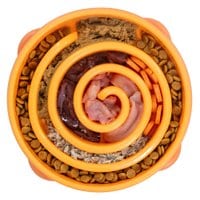
Outward Hound Fun Feeder Slo Bowl
Slower mealsA smaller portion disappears in seconds from a flat bowl; the ridges make the dog work for it, so the meal lasts and the begging starts later. Pick the size for your dog on the listing.
Etekcity Digital Kitchen Scale (11 lb / 5 kg, 1 g)
Measure food, not cupsThe first tip below: weigh the food. Kibble varies a lot per cup, and a scale that reads to a gram is the only way the calorie target above turns into the same portion every day.
Redmon Precision Digital Pet Scale (225 lb)
Weigh at homeFor dogs over about 20 lb — a low platform with a non-slip mat, reading in 2 oz steps up to 225 lb, so a monthly weigh-in happens at home instead of at the clinic. Toy breeds fit a kitchen-style pet scale.
More slow feeders and portion tools
Compare slow-feeder bowls, puzzle feeders and portion scoops.
Sources: VCA Animal Hospitals, “Obesity in dogs” (overweight = 10–20% above ideal body weight, obese = more than 20%; the most common preventable disease in dogs); Association for Pet Obesity Prevention, 2022 State of U.S. Pet Obesity survey (59% of dogs overweight or with obesity, up from 56% in 2018); Tufts Petfoodology, “How fast is too fast for my pet to lose weight?” (1–2% of body weight per week for dogs); Today's Veterinary Nurse, “Energy calculations” (RER = 70 × kg0.75; maintenance factors; 1–2% a week, more risks lean-mass loss); Kealy et al., JAVMA 2002, “Effects of diet restriction on life span and age-related changes in dogs” (Labradors fed 25% less lived a median 1.8 years longer); AAHA 2023 Senior Care Guidelines, Nutrition (body condition and muscle condition scoring at every senior visit); AAHA 2021 Nutrition and Weight Management Guidelines, nutritional risk factors (gestation and lactation as life stages with their own requirements); the AKC breed standards directory (breed weights); and Milk-Bone, Original Large biscuits (125 kcal per biscuit). The status thresholds (10% below the low end; 20% over the top), the 350 kcal/cup kibble assumption and the 1.6 maintenance factor in the cups estimate are this calculator's own model.
Ideal weight FAQs
1How do I know if my dog is overweight?
The easiest home test is the rib check: place your hands on your dog's sides and feel for the ribs. At a healthy weight, you should feel them under a thin layer of fat — like the back of your hand. If you can't feel ribs at all, your dog is likely overweight. Other signs include loss of waist definition when viewed from above, a belly that hangs level with or below the chest, reluctance to exercise, and heavy panting after mild activity. About 59% of US dogs are overweight or have obesity (APOP 2022), and VCA calls obesity the most common preventable disease in dogs.
2What is a healthy weight for my dog?
Healthy weight varies dramatically by breed, sex, and individual frame. A male Labrador Retriever's ideal weight is 65–80 lbs, while a French Bulldog's is under 28 lbs. Within a breed, males usually run heavier — often by 10–20%, and by a third in some large breeds. This calculator uses breed-specific weight ranges based on AKC breed standards and veterinary references. However, individual dogs can fall outside these ranges and still be healthy — your veterinarian can assess your specific dog's body condition.
3How much weight should my dog lose per week?
Veterinary nutritionists recommend a safe weight loss rate of 1–2% of body weight per week. For a 70-lb dog, that's about 0.7–1.4 lbs per week. Losing weight faster than 2% per week tends to strip lean muscle rather than fat and can leave the dog short on protein and micronutrients. A weight loss plan takes months, not weeks — at 1–2% a week, a dog 15% over its ideal weight needs roughly 7 to 14 weeks. Never crash-diet your dog — always work with your vet to create a gradual, sustainable plan.
4What is the RER formula for dog calories?
RER (Resting Energy Requirement) is the baseline calorie formula used by veterinarians: RER = 70 × (body weight in kg)^0.75. This gives the calories a dog needs at complete rest. For weight loss, this calculator uses RER × 1.0 at the top of the ideal range as its target — based on the dog's ideal weight, not the current weight; your vet sets the real number. For normal adult maintenance, MER (Maintenance Energy Requirement) is RER × 1.4–1.8 depending on activity level and neuter status.
5Do male and female dogs have different ideal weights?
Yes. In most breeds, males are noticeably larger and heavier than females. A male Golden Retriever's ideal range is 65–75 lbs compared to 55–65 lbs for females. This sexual dimorphism is most pronounced in large and giant breeds — a male Mastiff can be 160–230 lbs while a female is 120–170 lbs. Some small breeds (Shih Tzu, Pug, Chihuahua) show less difference between sexes. This calculator accounts for sex-specific ranges when you select a breed.
6Why is dog obesity dangerous?
Canine obesity is linked to a shortened lifespan (Labradors fed 25% less than their paired littermates lived a median 1.8 years longer in the Purina Lifespan Study, Kealy 2002), osteoarthritis, cranial cruciate ligament disease, insulin resistance and diabetes, respiratory compromise, heart disease, urinary disorders, certain cancers, and reduced quality of life. Even being moderately overweight (10–20% above ideal) significantly increases orthopedic stress and disease risk. VCA calls obesity the most common preventable disease in dogs.
7Is this calculator accurate for mixed breed dogs?
For mixed breed dogs, use the 'By size category' option which provides general weight ranges based on your dog's size class (Toy, Small, Medium, Large, Giant). These ranges are broader than breed-specific data but still give a useful baseline. For the most accurate assessment of any dog — purebred or mixed — combine this calculator with a hands-on Body Condition Score (BCS) evaluation and your veterinarian's assessment. Weight alone doesn't account for individual frame size and body composition.
8Should senior dogs weigh less than adult dogs?
Not automatically. Seniors often lose muscle, which can lower the number on the scale without making the dog leaner. AAHA's senior-care guidelines ask for both a body condition score and a muscle condition score at every senior visit rather than a lower target weight, so this calculator uses the same adult range for seniors. Unexplained weight loss in a senior dog (dental disease, kidney disease, cancer) needs a vet.