Dog Water Intake Calculator
Affiliate links on this page are marked (paid link); BreedTools may earn a commission at no extra cost to you.
How much water does a dog need?
The standard veterinary guideline is simple: approximately 1 ounce of water per pound of body weight per day — about 65 ml per kg, at the top of the 44–66 ml/kg Merck gives for most mammals in a thermoneutral environment. But this is just a baseline. Real-world water needs depend on what your dog eats, how active they are, the weather, and their life stage.
A 60-pound Labrador on dry kibble in summer heat may need double the baseline. A 10-pound Shih Tzu eating wet food in cool weather may need significantly less. This calculator accounts for all of these variables to give you a practical daily estimate. Healthy dogs with free access to fresh water self-regulate — treat the number as what to expect and keep the bowl full, not as a ration to measure out.
Factors that increase water needs
| Factor | Effect on intake | Why |
|---|---|---|
| Dry kibble diet | +10% | Kibble is only 3–11% water — dogs must drink more to compensate |
| Activity (moderate → very active) | +25% to +75% | Exercise generates heat and fluid loss through panting and saliva |
| Hot weather | +25% to +50% | Dogs cool themselves by panting, which evaporates water rapidly |
| Nursing mothers | +75% | Milk production requires a lot of fluid |
| Puppies | +50% | Higher metabolic rate and rapid growth increase fluid demands |
| Pregnancy | +25% | Supporting fetal development increases fluid requirements |
What this calculator applies. The multipliers are this tool's model, not a published standard; the 1 oz/lb baseline is PetMD's.
Factors that decrease water needs
Dogs eating wet food, raw diets, or home-cooked meals get a significant portion of their daily water from food. Canned food is 60% to more than 87% water, compared with 3–11% in dry kibble. These dogs still need a fresh water bowl available, but they will naturally drink less from it. This calculator subtracts 30% for wet or raw food and 10% for a mixed diet.
Signs of dehydration in dogs
Dehydration is more common than most owners realize, especially in warm weather, after exercise, or during illness. Knowing the signs can help you catch it early.
| Sign | How to check |
|---|---|
| Dry or tacky gums | Gums should be pink, glistening and moist — if your finger sticks to them, they are tacky |
| Slow skin tent | Pinch the skin at the back of the neck or over the shoulders — it should fall back at once; slow to return means dehydration |
| Sunken eyes | Eyes appear dull or recessed into the skull — a sign of severe dehydration |
| Thick, ropey saliva | Normal saliva is thin and watery |
| Lethargy | Unusually tired, reluctant to move or play |
| Excessive panting | Panting more than normal can be a sign of dehydration — it can also mean pain, anxiety or illness, so tell your vet |
PetMD, Is my dog dehydrated? (signs and what to do).
These are the signs PetMD lists; its rule is to offer a small amount of water and call the vet.
Tips for encouraging water intake
Some dogs are reluctant drinkers. If your dog consistently drinks much less than this estimate, try these strategies: add a splash of low-sodium bone broth to their water bowl, use a pet water fountain (many dogs prefer running water), place multiple water bowls around the house, add water to their dry kibble, or offer ice cubes as treats in warm weather.
Disclosure: As an Amazon Associate I earn from qualifying purchases. Links marked (paid link) are affiliate links, including Chewy affiliate links — buying through them supports BreedTools and adds nothing to your price, and it never changes what we recommend. Full affiliate disclosure
Bowls and fountains that make the estimate easy to meet
Free access is the rule — these keep water fresh, moving, and always within reach.
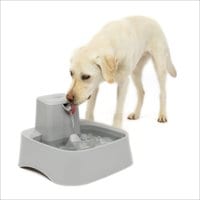
PetSafe Oasys 2 Gallon Pet Fountain
Reluctant drinkersMany dogs drink more from moving water. Two gallons with an adjustable stream, a tip-resistant base, and an open bowl so the dog can still drink if the pump loses power. Change the carbon filter every few weeks.
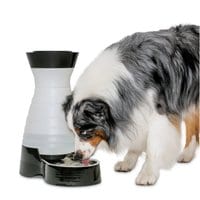
PetSafe Healthy Pet Water Station, 320 oz
Whelping roomA 320 oz gravity reservoir with a stainless bowl that refills itself — the answer to "keep water within reach of the whelping box" for a dam who will not leave the litter, or for a run with several dogs. The reservoir locks in place so it is hard to knock over.
Amazon Basics Stainless Steel Non-Skid Dog Bowl
Everyday bowlThe plain answer for the second and third bowls this page suggests placing around the house: 38 oz stainless steel with a rubber no-slip base, dishwasher safe, no plastic to hold odours.
More bowls and fountains
Compare capacities, stainless options and fountain sizes for your dog.
Sources: PetMD, “How much water should a dog drink?” (about 1 ounce per pound of body weight a day; do not restrict water; pregnant and nursing dogs dehydrate more readily; skin-pinch and gum checks); the Merck Veterinary Manual, nutritional requirements of small animals (about 44–66 mL/kg in a thermoneutral environment; canned food 60% to over 87% water, dry food 3–11%; canned-fed dogs drink less; healthy animals self-regulate and intake should not be restricted); and PetMD, “Is my dog dehydrated?” (skin tent, tacky gums, dry nose, thick saliva, sunken eyes, lethargy, excessive panting; mild = tacky gums only → small amounts of cool water; anything more → call the vet immediately; never a large volume at once). The activity, diet, life-stage and weather multipliers are this calculator's own model.
Dog water intake FAQs
1How much water should a dog drink per day?
The general veterinary guideline is approximately 1 ounce of water per pound of body weight per day. A 50-pound dog needs roughly 50 ounces (about 6 cups) daily. This baseline increases with activity, heat, dry food diets, and certain life stages like nursing.
2Do dogs on wet food need less water?
Yes. Canned food is 60% to more than 87% water and dry food only 3–11% (Merck), so dogs on canned food drink noticeably less from the bowl — Merck notes canned-fed dogs generally drink less than kibble-fed dogs — and raw and home-cooked diets are also mostly water. This calculator subtracts 30% for wet or raw food. They still need fresh water available at all times.
3How can I tell if my dog is dehydrated?
Common signs of dehydration include dry or tacky gums, loss of skin elasticity (the skin tent test — pinch the skin at the back of the neck or over the shoulders and it should fall back immediately), sunken eyes, lethargy, thick sticky saliva, and panting more than normal.
4Can a dog drink too much water?
Yes. Excessive water intake (polydipsia) can be a sign of diabetes, kidney disease, Cushing's disease, or other conditions. If your dog suddenly starts drinking significantly more than normal without an obvious reason like heat or exercise, consult your vet. Water intoxication from drinking extreme amounts is also possible but rare.
5Should I limit my dog's water intake?
In most cases, no. Healthy dogs should have access to fresh, clean water at all times. The only common exception is house-training puppies — some trainers suggest picking up the water bowl 2-3 hours before bedtime. Never restrict water for adult dogs unless specifically instructed by your veterinarian.
6Do puppies need more water than adult dogs?
Relative to their body weight, yes. Puppies are growing rapidly and have higher metabolic rates, and their small body mass gives them less reserve when they lose fluid. This calculator adds 50% for puppies on top of the other factors.
7How much water does a nursing dog need?
Nursing (lactating) dogs need substantially more water — milk is mostly water — and PetMD lists pregnant and nursing dogs among those that dehydrate more readily. This calculator adds 75% for nursing on top of the other factors, and Merck's guidance is that a healthy dog with free access to water self-regulates, so keep the bowl full rather than measuring it out. Keep fresh water within easy reach of the whelping area — a dam may not leave the litter to find it.
8Is tap water safe for dogs?
In most areas with treated municipal water, tap water is safe for dogs. However, if your tap water has high levels of chlorine, fluoride, or heavy metals (common in older plumbing), filtered water is a better choice. Well water should be tested periodically. Avoid giving dogs water from standing outdoor puddles or ponds, which can contain Leptospira bacteria and blue-green algae — both potentially fatal to dogs.