A well-designed whelping box is one of the most important preparations a breeder can make. It provides a safe, contained space for delivery and the critical first weeks of life — protecting puppies from being crushed, maintaining proper temperature, and giving the dam a quiet, secure place to nurse.
You don't need to spend a fortune, but you do need to get the fundamentals right: proper sizing, crush protection, appropriate bedding, and temperature management.
Sizing the box by breed
The whelping box needs to be large enough for the dam to lie fully stretched on her side with comfortable room around her, but not so large that puppies can wander away from her warmth. The general rule is about 1.5 times the dam's length (nose to base of tail) on each side.
| Breed Size | Example Breeds | Recommended Box Size | Wall Height |
|---|---|---|---|
| Toy (under 10 lb) | Chihuahua, Yorkie, Maltese | 2×2 to 2.5×2.5 ft | 8-10 in |
| Small (10-25 lb) | French Bulldog, Pug, Shih Tzu | 3×3 ft | 10-12 in |
| Medium (25-50 lb) | Beagle, Cocker Spaniel | 3.5×3.5 to 4×4 ft | 12-16 in |
| Large (50-90 lb) | Labrador, Golden Retriever | 4×4 to 5×5 ft | 16-20 in |
| Giant (90+ lb) | Great Dane, Mastiff | 5×5 ft or larger | 20-24 in |
General guidelines — adjust based on individual dam size. Walls should be low enough for the dam to step over easily but high enough to contain puppies.
For toy breeds, a hard-sided kiddie pool can work surprisingly well as a whelping box — it's round (no corners for puppies to get stuck in), easy to clean, and the right size. Some breeders prefer this over a traditional square box.
Materials and construction
Whelping boxes come in several varieties, each with tradeoffs:
- DIY plywood/wood — Inexpensive, customizable to exact size. Seal all surfaces with waterproof polyurethane or line with FRP (fiberglass reinforced plastic) panels to prevent moisture absorption and make cleaning easier. Unseal wood will absorb fluids and become unsanitary
- Commercial whelping boxes — Brands like MagnaBox, EZWhelp, and DuraWhelp offer purpose-built options in various sizes. More expensive upfront but designed for easy cleaning, built-in pig rails, and multiple litter use. PVC and corrugated plastic models are lightweight and easy to disinfect
- Plastic kiddie pools — Good for toy and small breeds. Affordable, easy to clean, and round shape eliminates corner traps. Not ideal for larger breeds due to low walls and limited size options
Pig rails — what they are and why they matter
Pig rails (also called puppy rails or anti-crush bars) are horizontal rails installed around the inside perimeter of the whelping box, raised a few inches off the floor and positioned a few inches from the wall. They create a sheltered gap between the wall and the rail where a puppy can safely lie without risk of being crushed if the dam rolls against the side.
Puppy crushing is a real risk, particularly with larger breeds. A sleeping dam shifting her weight against the wall can easily suffocate a newborn puppy trapped between her body and the wall. Pig rails provide a lifesaving buffer.
For DIY builds, PVC pipe (1-2 inch diameter) mounted on brackets works well. Position the rail 3-4 inches from the wall and 3-4 inches off the floor — high enough for puppies to roll under, but not so high that the dam can wedge herself underneath.
Bedding choices
What you put in the bottom of the whelping box matters more than you might think. The bedding needs to provide traction for puppies learning to crawl, insulation from the cold floor, absorbency for fluids, and be easy to change and clean frequently.
- Washable whelping pads — The gold standard. Textured surface provides traction, waterproof backing protects the box floor, and they can be machine washed and reused for multiple litters. Layer them so you can quickly swap a soiled pad for a clean one
- Newspapers — Inexpensive and disposable, but provide poor insulation and become slippery when wet. Better as a bottom layer under pads than as the primary surface
- Towels — Soft and warm, but they bunch up and create folds where puppies can become trapped or suffocate. If used, pull them taut and secure the edges. Change them frequently
Disclosure: As an Amazon Associate I earn from qualifying purchases. Links marked (paid link) are affiliate links, including Chewy affiliate links — buying through them supports BreedTools and adds nothing to your price, and it never changes what we recommend. Full affiliate disclosure
Box, pen, and liners breeders actually buy
The same picks our whelping box calculator recommends — check the listed dimensions against your breed's row above.
EZwhelp EZclassic whelping box with rails
Rails includedThe breeder-standard box with pig rails built in rather than a DIY add-on. EZwhelp lists interior dimensions for each size (28, 38, and 48 in) — check them against the sizing table above before ordering.
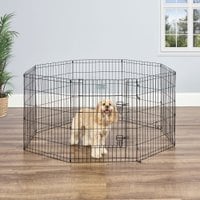
MidWest folding exercise pen (30 in)
Weeks 4+Litters outgrow the box around week 3–4. A folding metal pen set up around the box gives walking puppies room to play while the box stays the sleeping den.
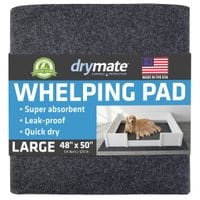
Drymate whelping box liner (48×50)
A washable, waterproof felt-top liner that wicks fluid away from puppies and grips the floor. Buy two so one is always clean while the other is in the machine.
EZwhelp washable whelping pads (48×60)
Layer over the liner and swap out fast during delivery. Wicks moisture away from newborns, and survives hundreds of washes — safer than loose towels puppies can burrow under.
Temperature management
Newborn puppies cannot regulate their body temperature for the first 2-3 weeks of life. The whelping area temperature is not optional — it's a survival requirement. For a complete guide to the neonatal period, see caring for newborn puppies.
The key principle is creating a temperature gradient — one side of the box warmer, one side cooler. This allows puppies to self-select their comfort level as they become mobile, and gives the dam a cooler area where she's not overheating.
- Heat lamps — Effective but must be secured safely above the box. Red bulbs reduce disruption to the dam's sleep cycle. Hang high enough to prevent overheating and burns
- Heating pads — Place under (not inside) the box on one side, or use veterinary-grade pads designed for whelping. Never place a heating pad where puppies are in direct contact — they can't move away if it's too hot
- Space heaters — Can supplement ambient room temperature but shouldn't be the primary heat source. Ensure they're pet-safe and don't create a fire risk
Placement in the home
Where you put the whelping box matters almost as much as the box itself:
- Quiet, low-traffic area — Away from the main household activity. A spare bedroom, dedicated whelping room, or quiet corner of the house works well. Avoid laundry rooms (vibration and noise), kitchens (too much traffic), and garages (temperature fluctuation)
- Accessible for the breeder — You'll be checking on the litter frequently, especially in the first week. The area should be easy for you to access at all hours, including middle-of-the-night checks
- Climate controlled — The room should maintain a stable temperature. Avoid areas with drafts, direct sunlight, or poor heating/cooling
- Easy to clean — Hard flooring is better than carpet. If the box is on carpet, place a waterproof tarp or sheet underneath to protect the floor
Introducing the dam before delivery
Set up the whelping box at least 1-2 weeks before the expected due date. This gives the dam time to explore it, sleep in it, and accept it as her space.
Place familiar items inside — a worn shirt, her favorite blanket, treats. Feed her meals near the box. Encourage her to nap there. The goal is for her to choose the whelping box voluntarily when labor begins, rather than seeking out a dark closet or the space under your bed. Knowing the signs your dog is going into labor will help you recognize when it's time.
If the dam seems reluctant, don't force it. Place the box in an area she already gravitates toward. Some dams take to the box immediately; others need gentle encouragement over several days.
Cleaning protocols
A whelping box needs to be cleaned frequently — newborn puppies are vulnerable to infection, and the dam produces lochia (postpartum discharge) for several weeks after delivery.
- During whelping — Remove soiled bedding between puppies if possible. Keep clean pads within arm's reach
- First 2 weeks — Change bedding at least twice daily, more often with large litters. Wipe down box surfaces with a pet-safe disinfectant
- Weeks 3-8 — As puppies become mobile and begin eating solid food, the mess increases significantly. Clean as needed — often 3-4 times daily
Having at least 6-8 washable whelping pads in rotation ensures you always have clean ones ready while soiled pads are in the wash. This is one area where being overprepared pays off. Use the Whelping Supplies Checklist to make sure you have everything organized before delivery day.
Whelping box FAQs
How big should a whelping box be?
What are pig rails and do I need them?
What should I put in the bottom of a whelping box?
How warm should the whelping area be?
When should I set up the whelping box?
Related Tools
Sources: Merck Veterinary Manual (Care of Newborn Puppies and Kittens; Whelping Environment); BSAVA Manual of Canine and Feline Reproduction and Neonatology (England GCW, von Heimendahl A eds.); Lopate C, ed. Management of Pregnant and Neonatal Dogs, Cats, and Exotic Pets (Wiley-Blackwell); Davidson AP — UC Davis canine neonatology; Root Kustritz MV — University of Minnesota canine theriogenology; AKC Canine Health Foundation. Pig-rail and box-sizing conventions reflect long-standing breeder practice documented in multiple breed-specific whelping references. This article is for educational purposes and does not replace professional veterinary care.